




Noosa
Interior Design Concept Presentation Template for Studios
A concept presentation an interior design studio sends after signing: the brief read back, the design room by room, how it answers the brief, the numbers it moves and the approval that opens developed design.
Make it yours, in seconds
Every template is a starting point. Drag to shift colour, typography and layout — the live preview updates as you move.
Move the dots to shift colour, typography and layout. The preview updates live.
Get more from every document
You turn a design concept into a proposal your client can say yes to. Hero imagery, room-by-room visuals, budget figures, and a sign-off block are built in and ready to fill.
Get the yes without leaving the page
Your client reads the scope, hits the agreement section, and signs right there. No PDF download, no printing, no chasing.
Assemble proposals from proven sections
Pull a hero, breakdown, or steps section from the library, or save your best pricing card and reuse it in the next pitch.
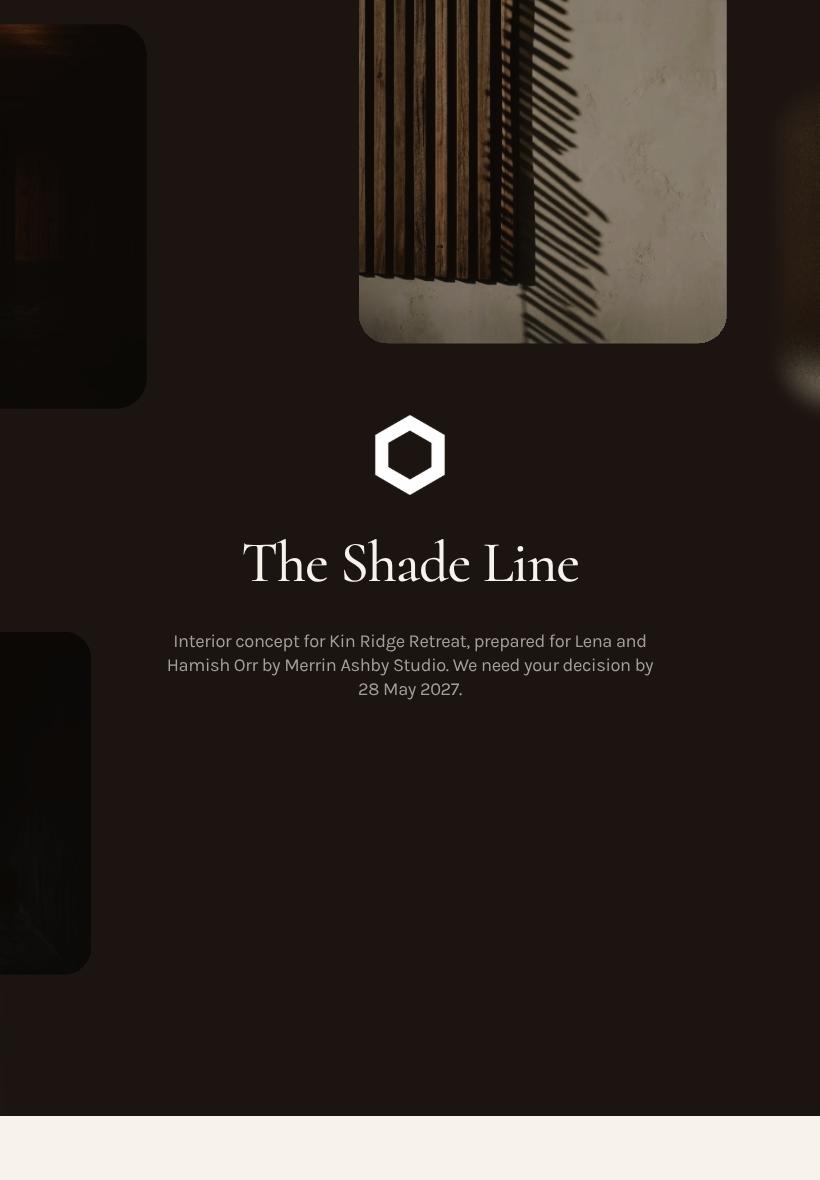
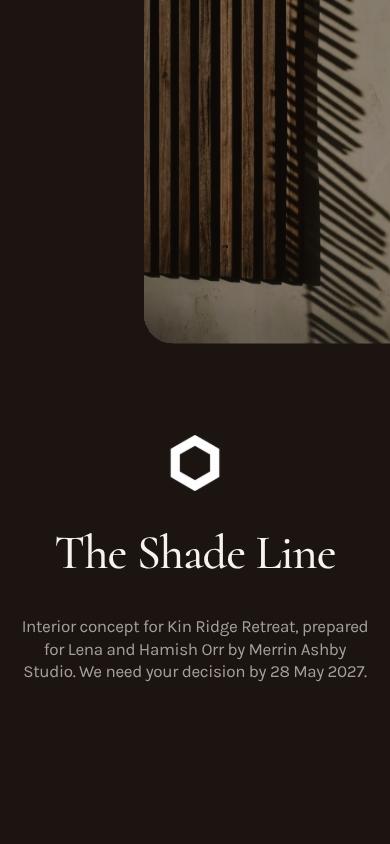
Your pitch looks right on every screen
Your hero images and showcase work hold their shape when a client opens the proposal on a phone between meetings.
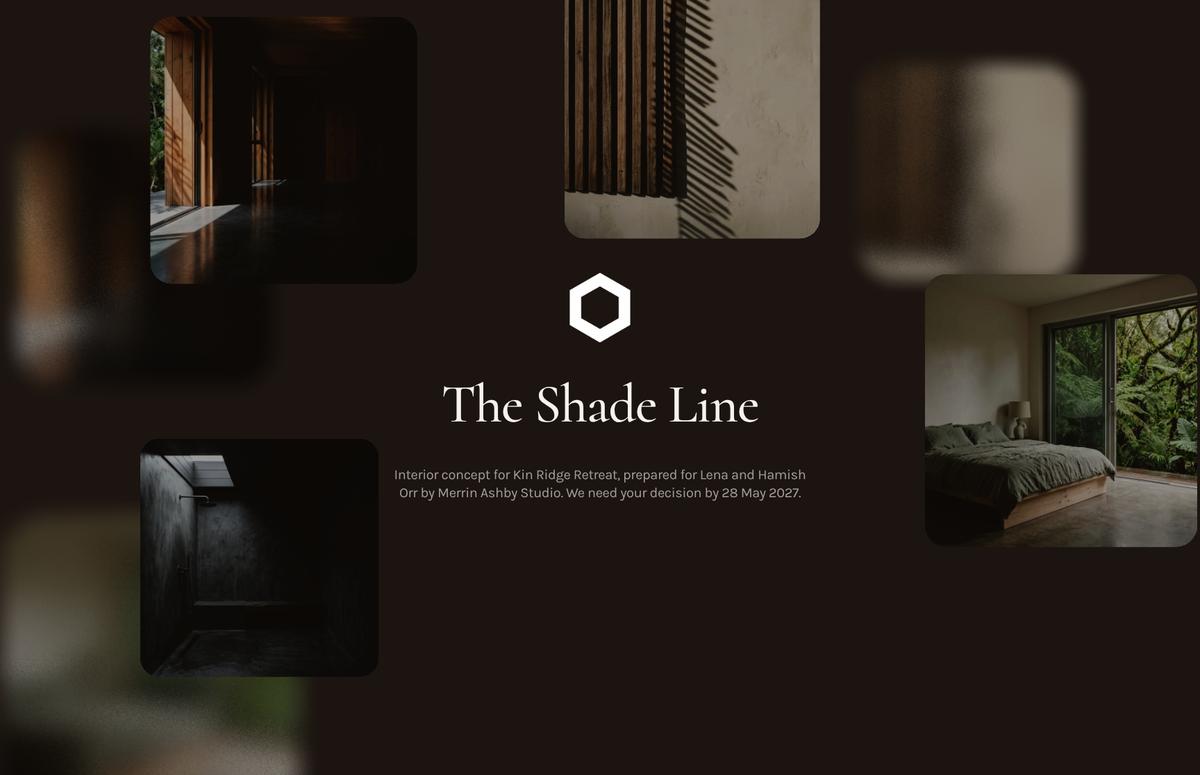

See which section sold them
Heatmaps show who lingered on your breakdown, and session replays let you time the follow-up call while interest is high.
Know the moment they open it
A ping when the client views, comments on the scope, or signs the agreement, so you reply while the proposal is fresh.
Write the proposal together, live
Your designer tweaks the showcase while you rework the pricing breakdown, both in the same document, same minute.
See how every part fits
The proposal opens with a cover and a decision deadline, then walks through the brief, the concept, and the rooms, and closes on sign-off. Keep, drop, or reorder anything to fit your project.
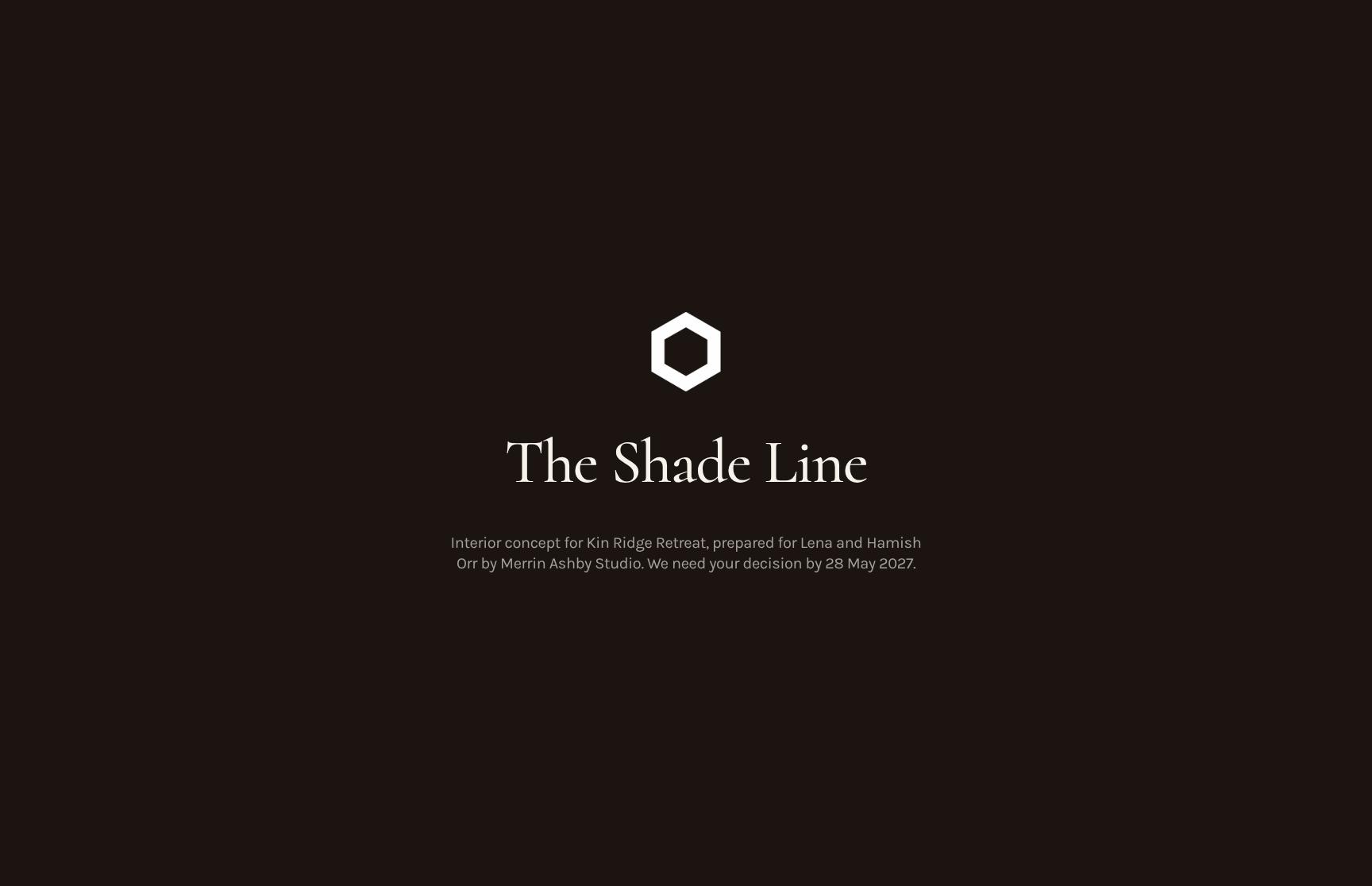
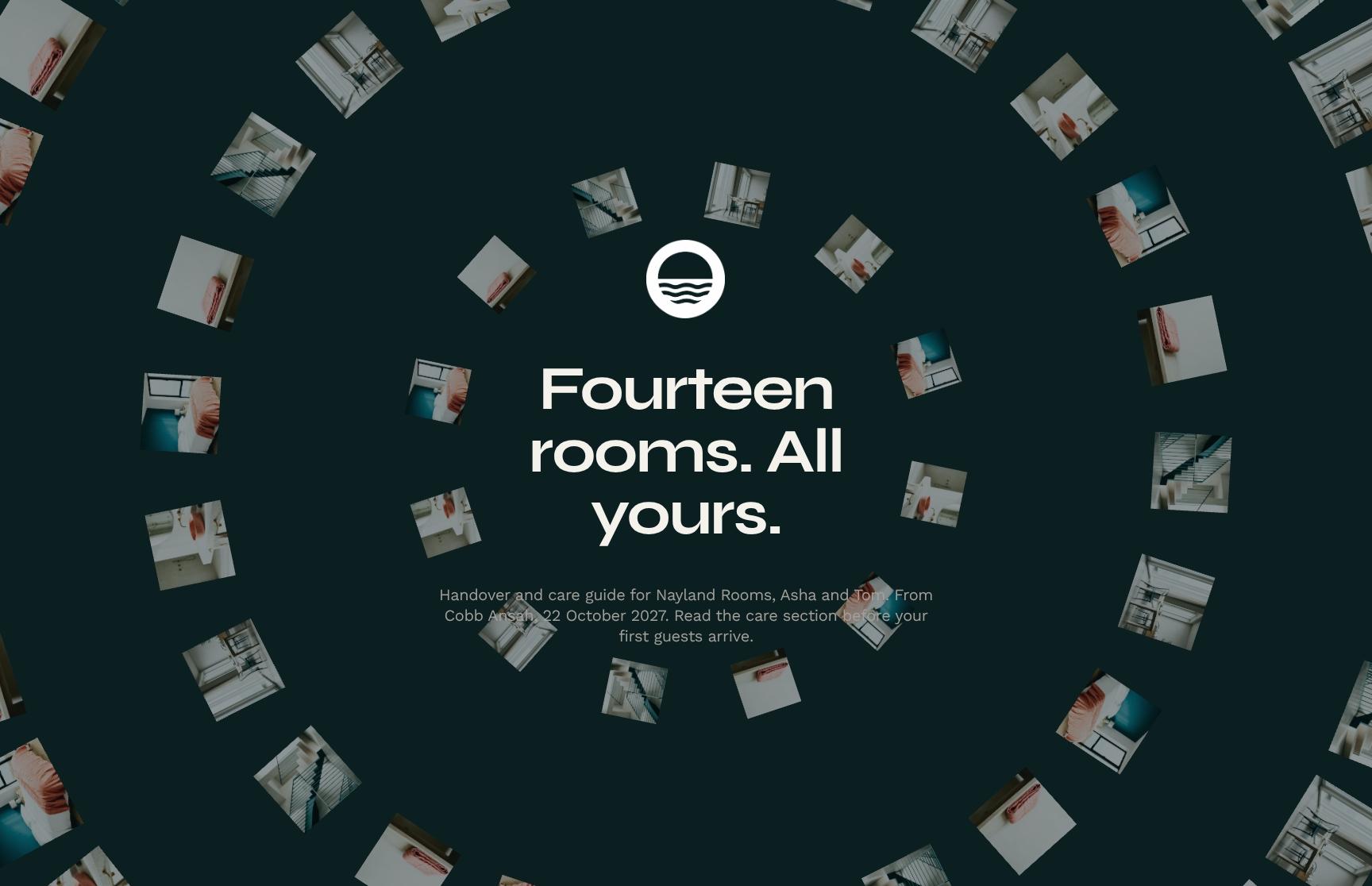
Interior Concept Cover with Hero Imagery and Decision Deadline
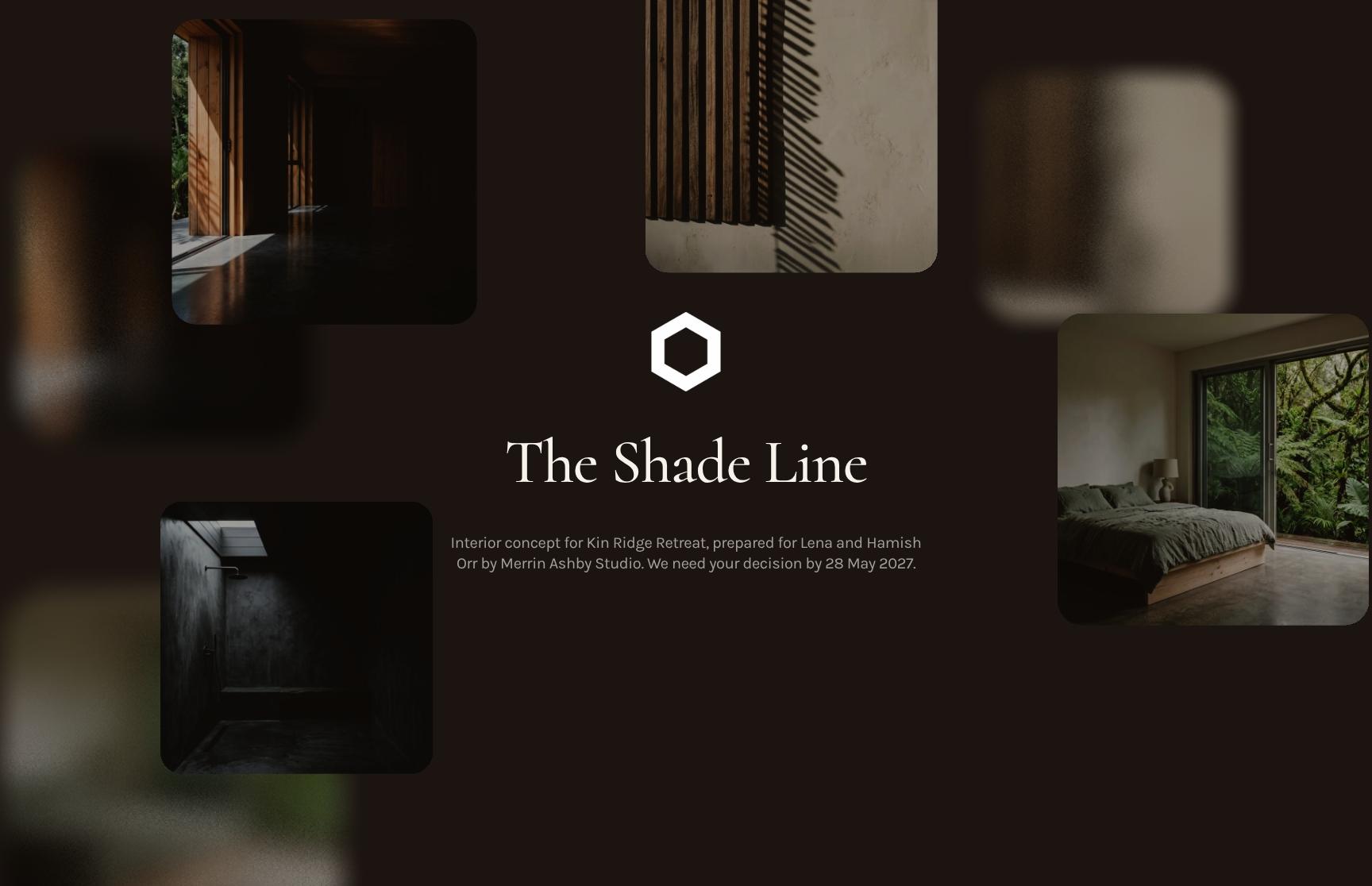
Opens with a striking hero image for the Shade Line concept at Kin Ridge Retreat. Names the clients and studio and states the 28 May 2027 decision date, so the purpose and timeline are clear at first glance.
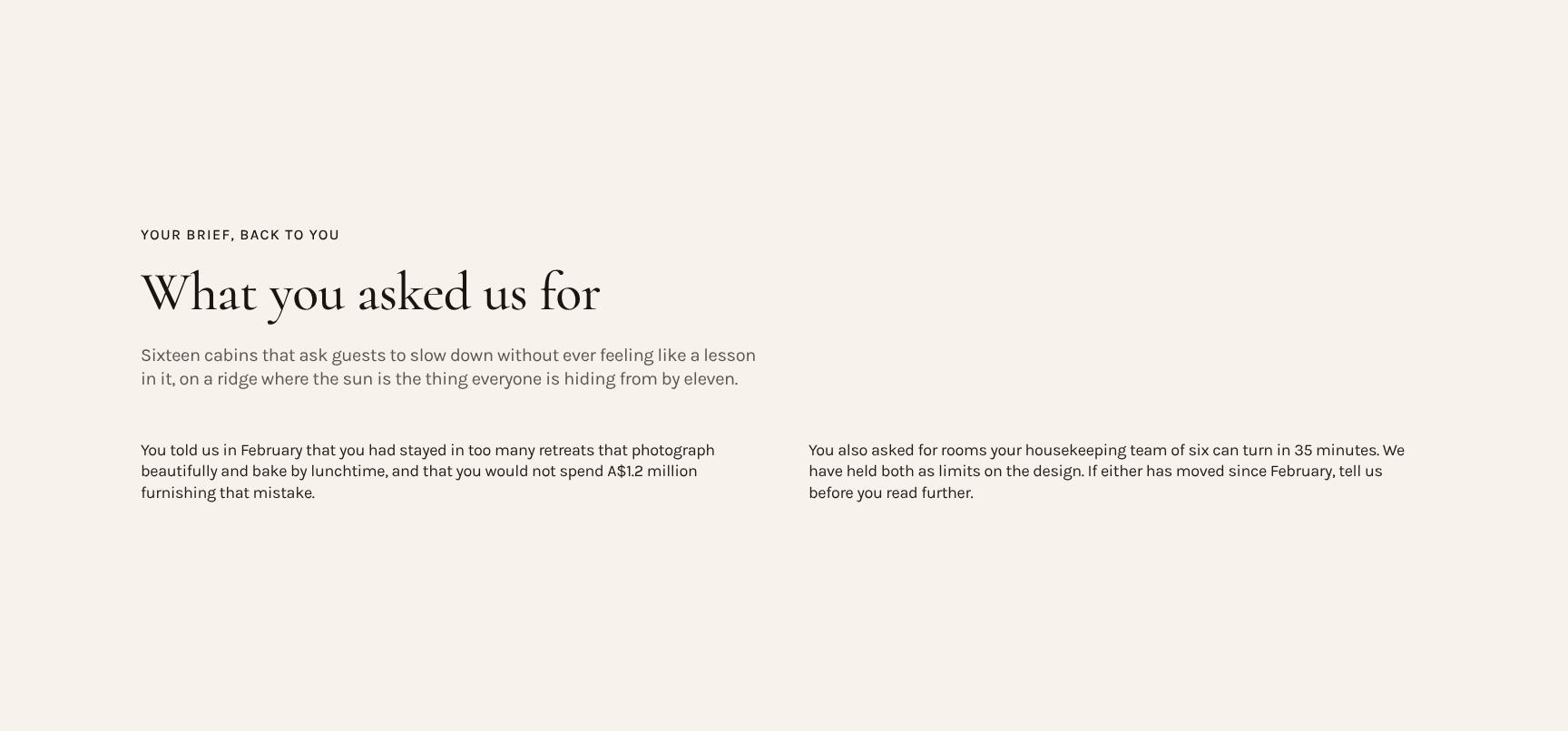
Client Brief Recap: What You Asked Us For
Plays the brief back to the client in their own terms: sixteen slow-living cabins on a sun-exposed ridge. Shows the studio listened and sets the criteria the concept is judged against.

The Big Idea: Shade-Line Design Concept
A short animated statement of the central idea: every cabin is planned around where shade falls at 2pm. Gives the client one memorable principle that anchors every later design decision.
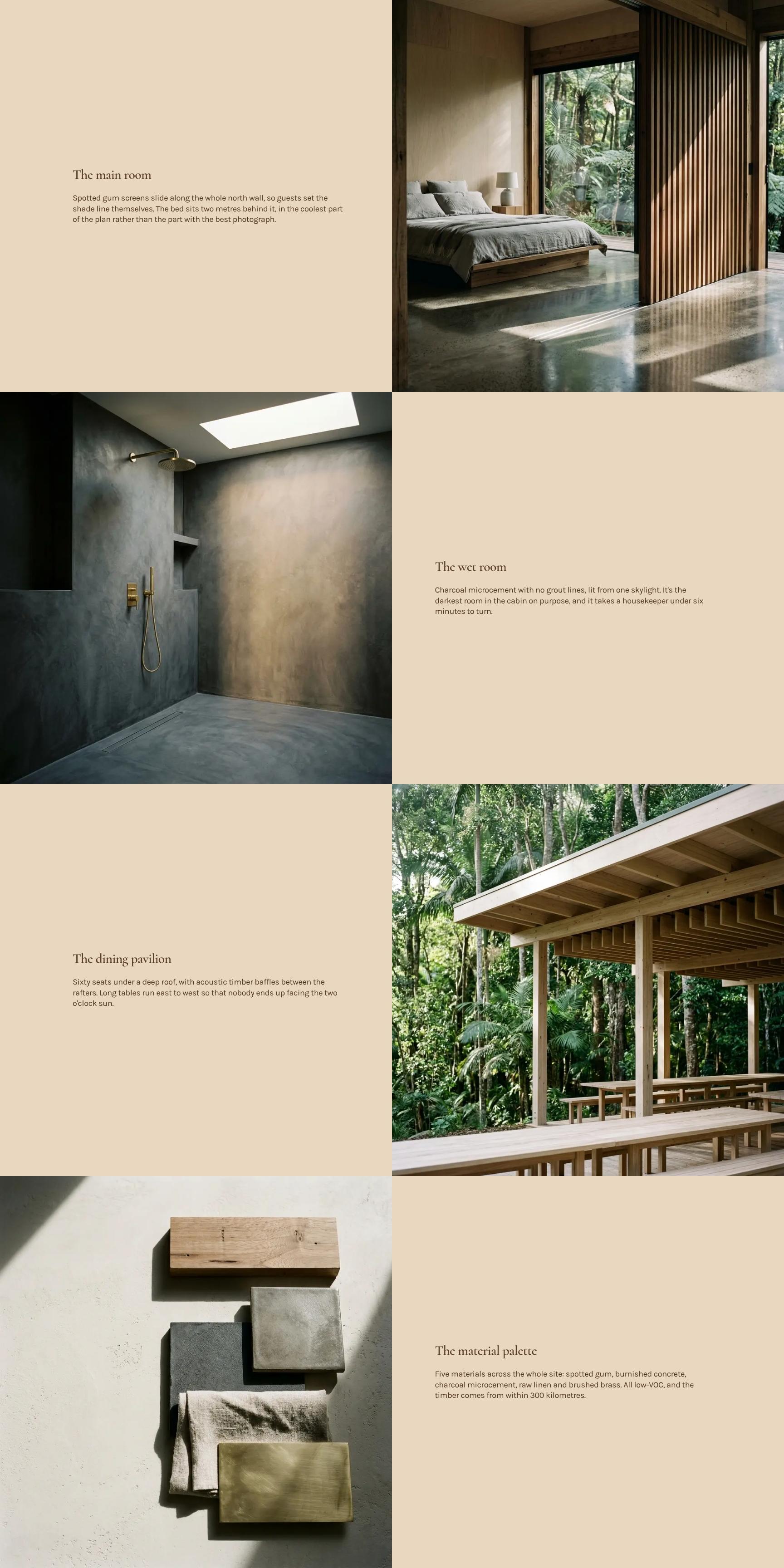
Room-by-Room Cabin Interior Showcase
Walks through the cabin spaces, from the main room with spotted gum screens to the bed placed in the coolest part of the plan. Shows materials, layout and guest experience so clients can picture the finished retreat.
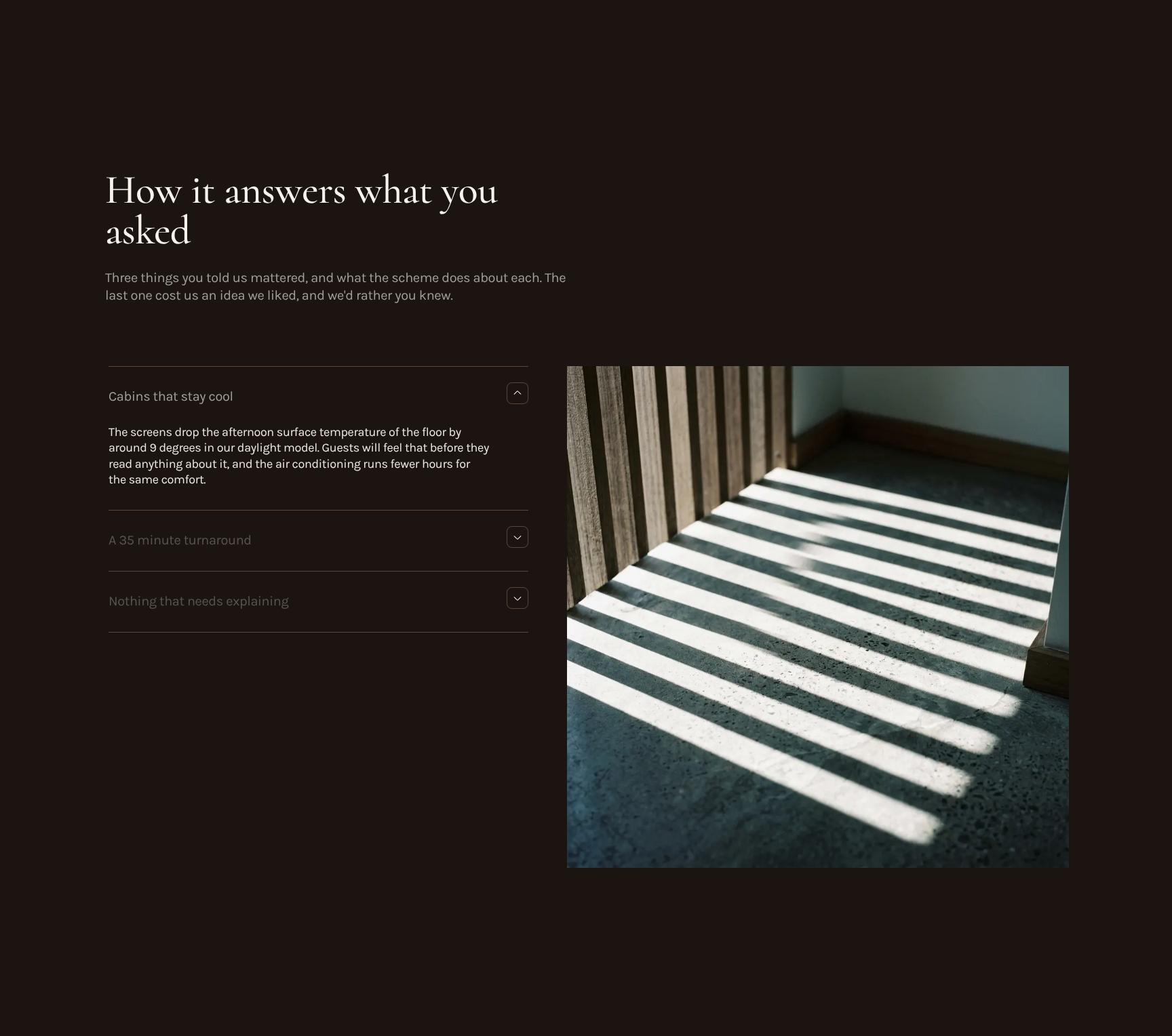
Design Response Breakdown: How the Concept Meets Your Brief
Maps three client priorities to specific design moves. Candidly notes the one idea the studio gave up, building trust through transparent trade-offs.
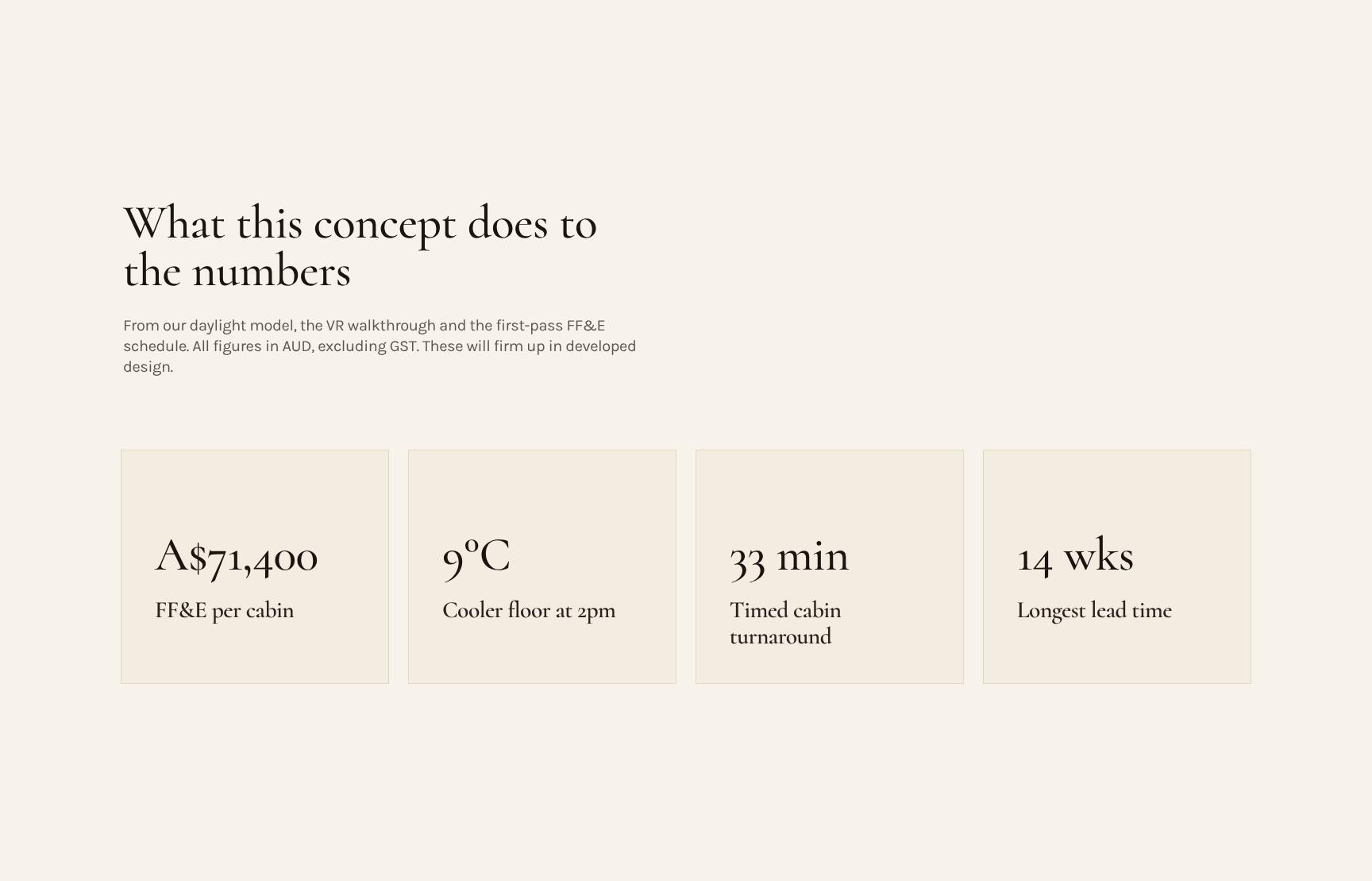
Concept Impact on Budget and Performance Numbers
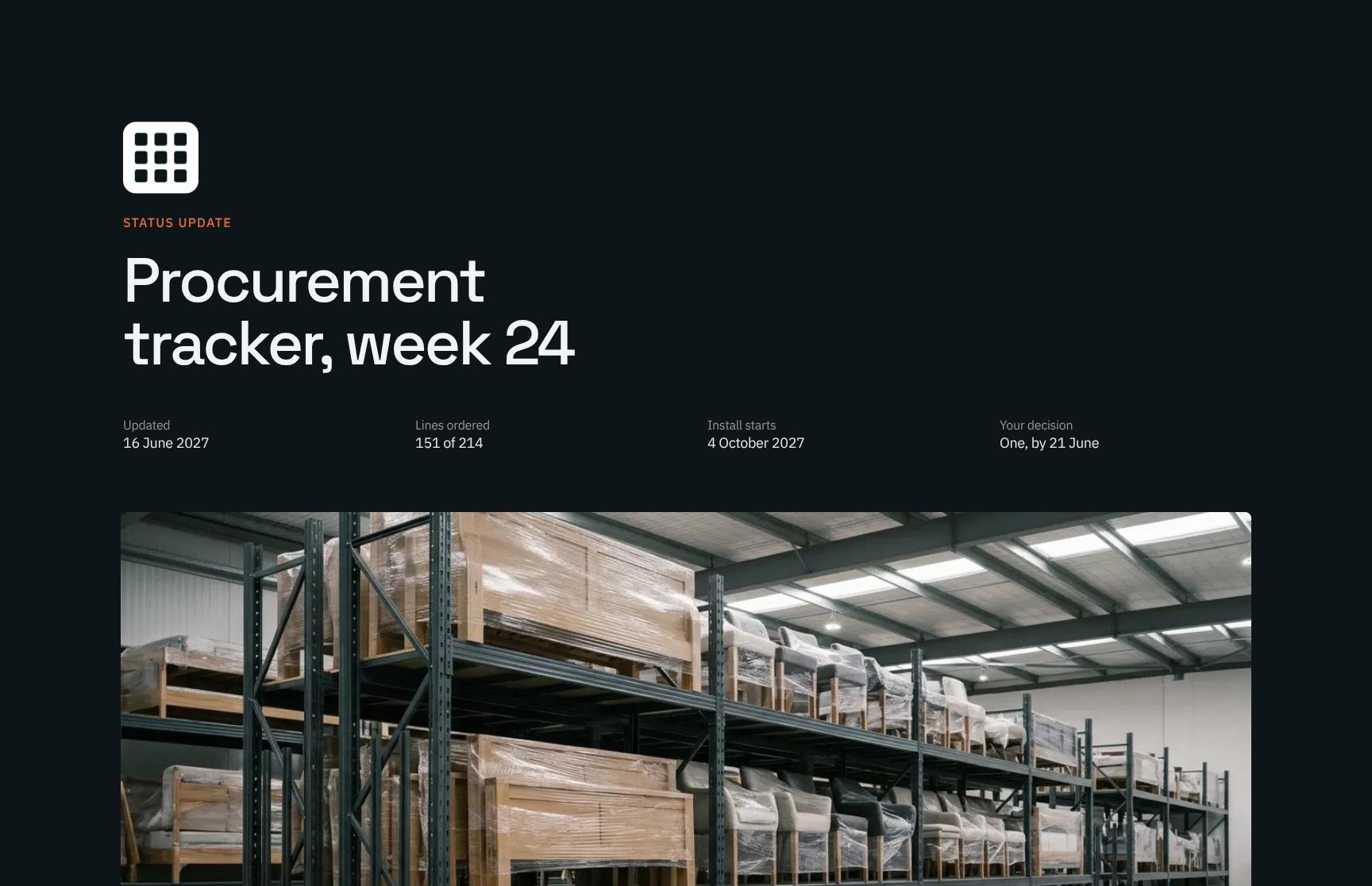
Cards summarise figures from the daylight model, VR walkthrough and first-pass FF&E schedule, in AUD excluding GST. Clear estimates help clients weigh cost and performance before developed design.
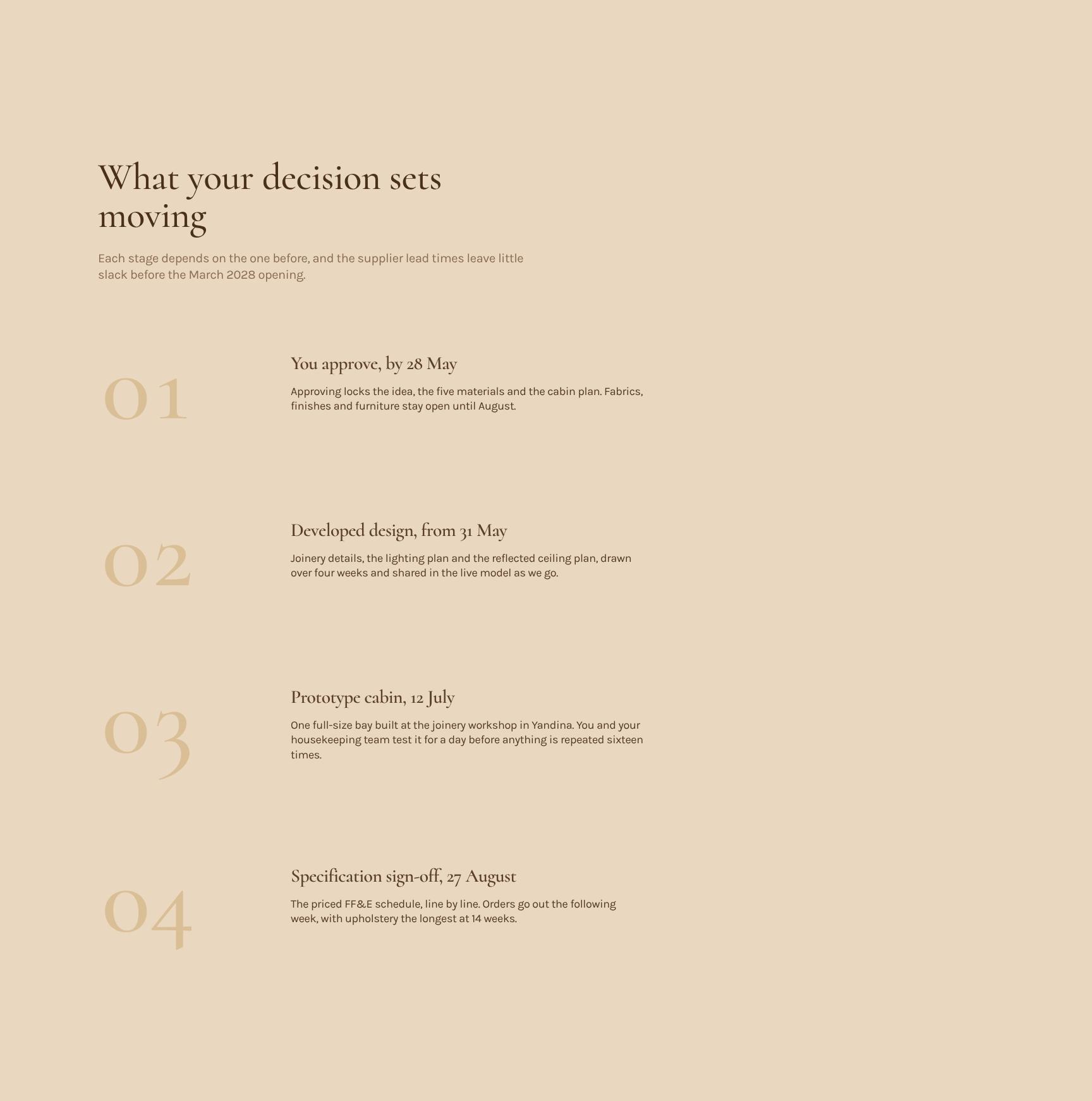
Project Timeline: Next Steps After Approval
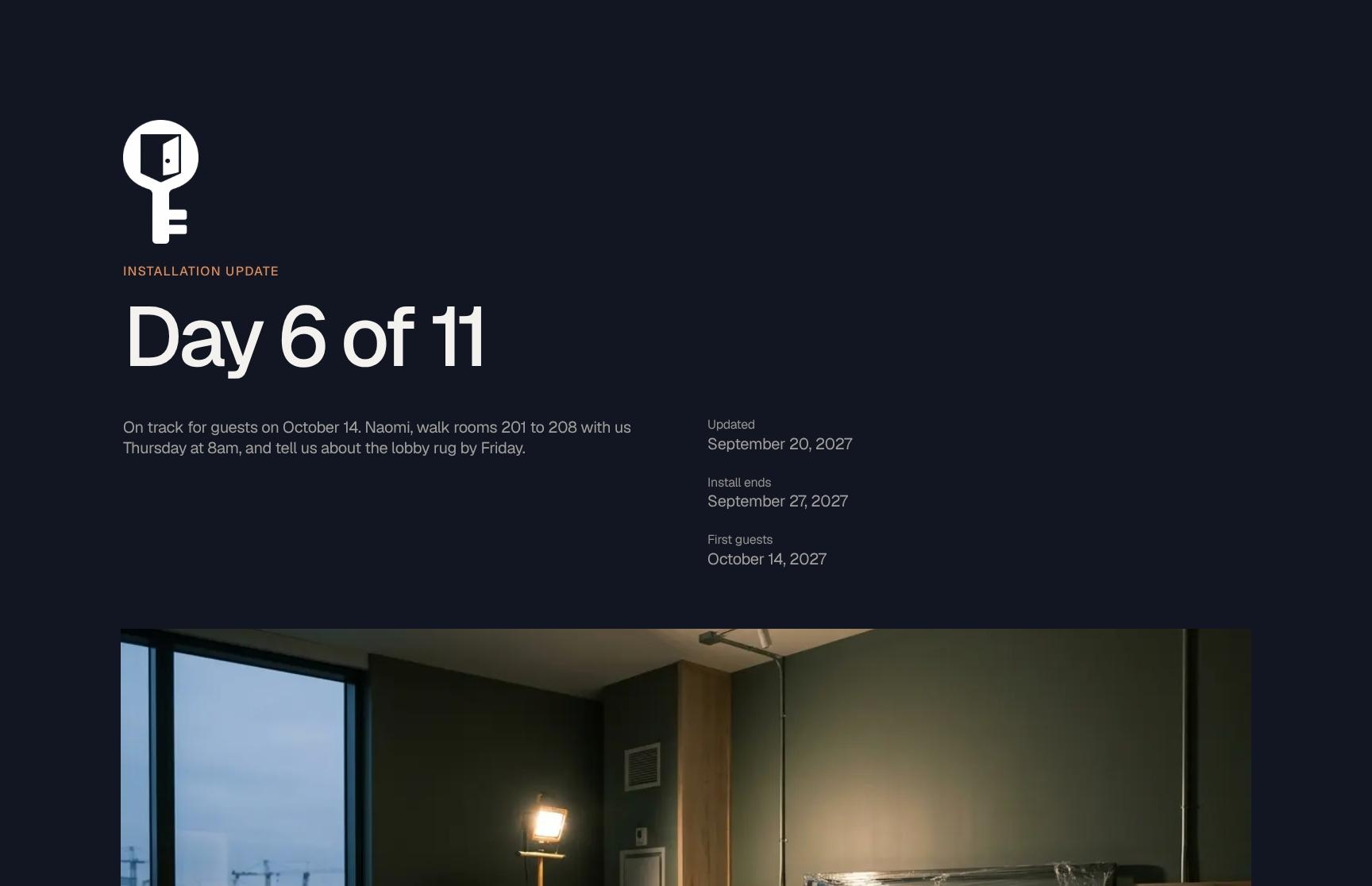
Sequential steps show what the decision sets in motion, with supplier lead times and the March 2028 opening in view. Makes clear why a prompt answer protects the schedule.
Approve the Direction: Decision and Sign-Off
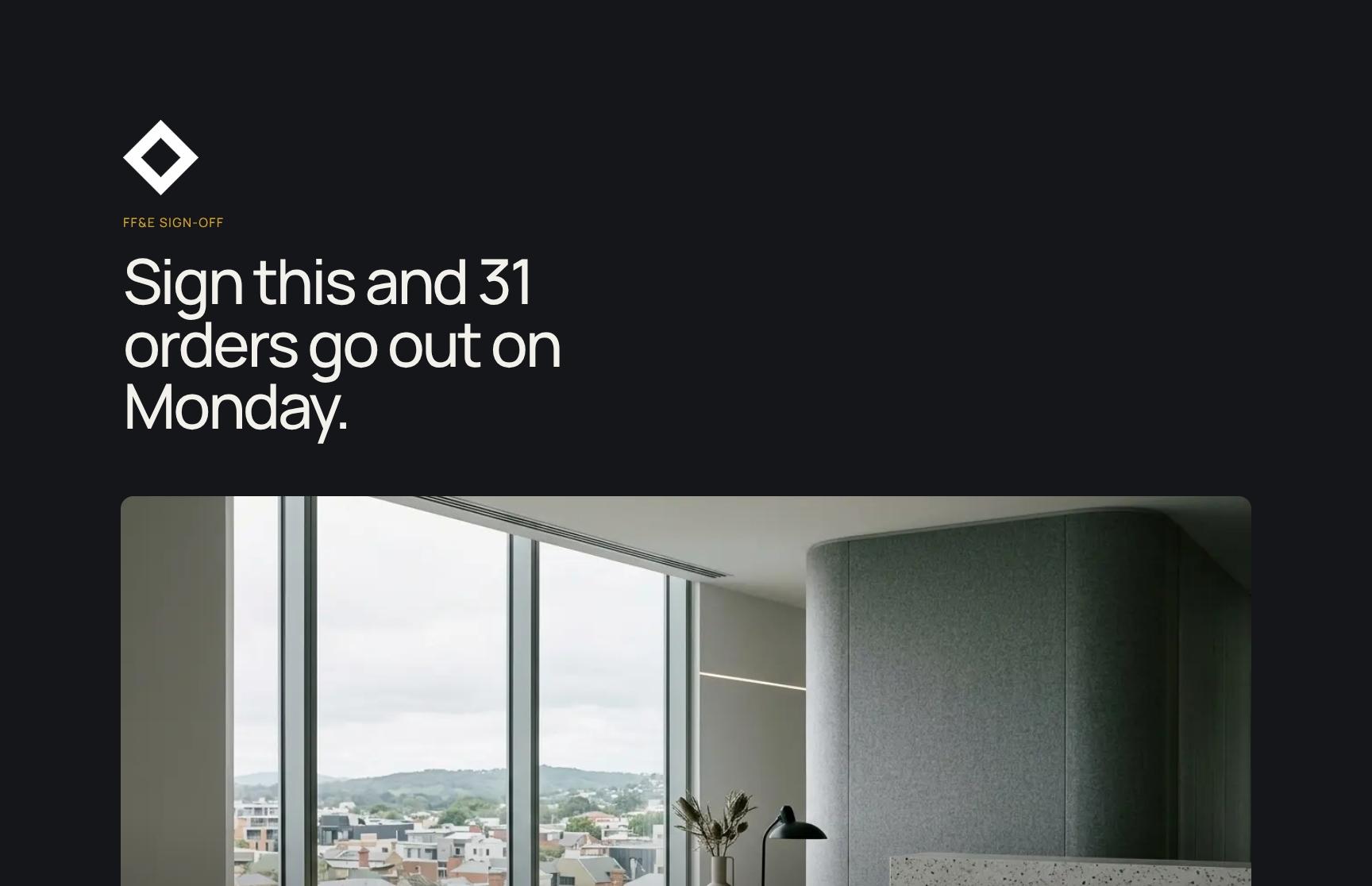
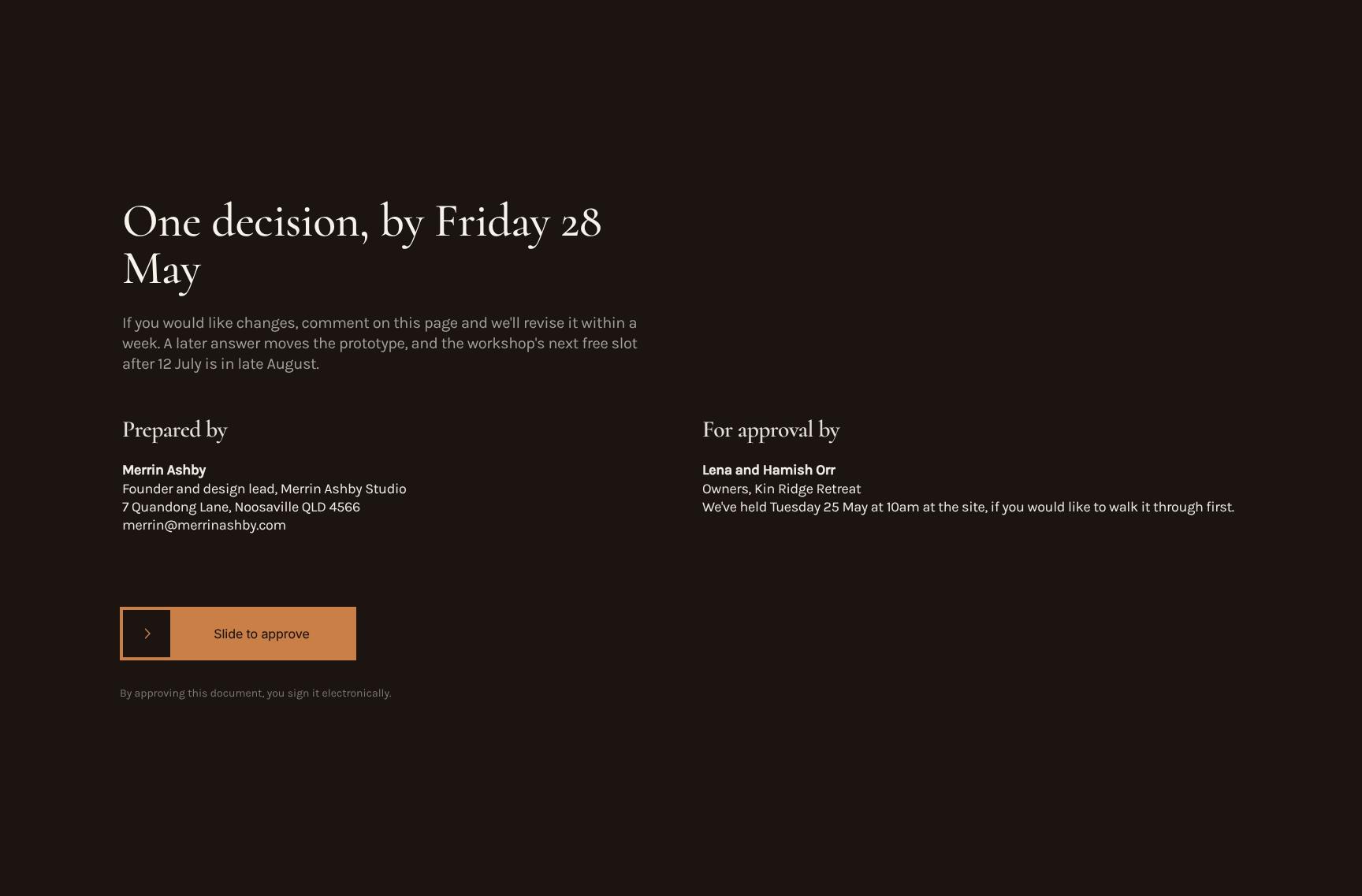
A single clear call to action by Friday 28 May. Explains the option to comment for revisions within a week and the cost of delay, including the late August workshop slot, so approval is easy.
Find your answers
Answers to common questions about building interior design proposals for clients, from editing sections to adding imagery and collecting approval.
A strong concept proposal should include a clear concept statement, a summary of the client's brief, your core idea, a breakdown of the spaces or rooms, a comparison against the brief, and transparent numbers. This template covers all six: Concept, The brief, The idea, The rooms, Against the brief, and The numbers. Following this order helps clients see how your solution answers their needs.
Replace the placeholder text in each section with your project details, starting with The brief so the rest of the proposal stays anchored to client goals. Then update The rooms with your spaces or deliverables and edit The numbers with your pricing and budget. You can also change fonts, colors, and images to match your brand.
Use the Against the brief section to map each client requirement to the part of your idea that solves it. List the brief's key points side by side with your response, and include evidence such as room features, layouts, or costs. This builds trust and makes approval easier by showing you listened.
The numbers section should include a clear cost breakdown, total budget, and any assumptions, allowances, or optional extras. Group costs by room or deliverable to match the structure of the proposal, and state payment terms and validity dates. Transparent figures reduce back-and-forth and help clients make faster decisions.
Yes. The room-by-room structure suits interior designers, architects, event planners, hospitality fit-outs, and creative agencies pitching spatial or experiential concepts. Rename The rooms to zones, stages, or deliverables if your work isn't space-based. The brief-to-idea-to-numbers flow works for any project that requires a concept pitch.
Browse more interior design templates
More proposal and pitch templates for creative professionals who sell concepts, win clients, and need a clear yes.